INFRASTRUCTURE
- Linux
- Docker
- Kubernetes
- Helm
- Cilium
- Longhorn
01 / SOFTWARE + CLOUD
00 HARDWARE Rack, chassis, power and thermals. ProLiant nodes, disks, cooling.
I LIKE SYSTEMS WITH LAYERS.
A FOUR-NODE ENVIRONMENT FOR LEARNING THE WHOLE CLUSTER PATH
The cluster is a working laboratory, not a finished demo: one control plane and three workers used to trace how scheduling, networking, storage and services behave together.
Provision the nodes and assemble the platform from Linux upward.
Use Cilium and Hubble to inspect traffic instead of treating the network as a black box.
Change one layer at a time, break assumptions, and carry the lesson into the next iteration.
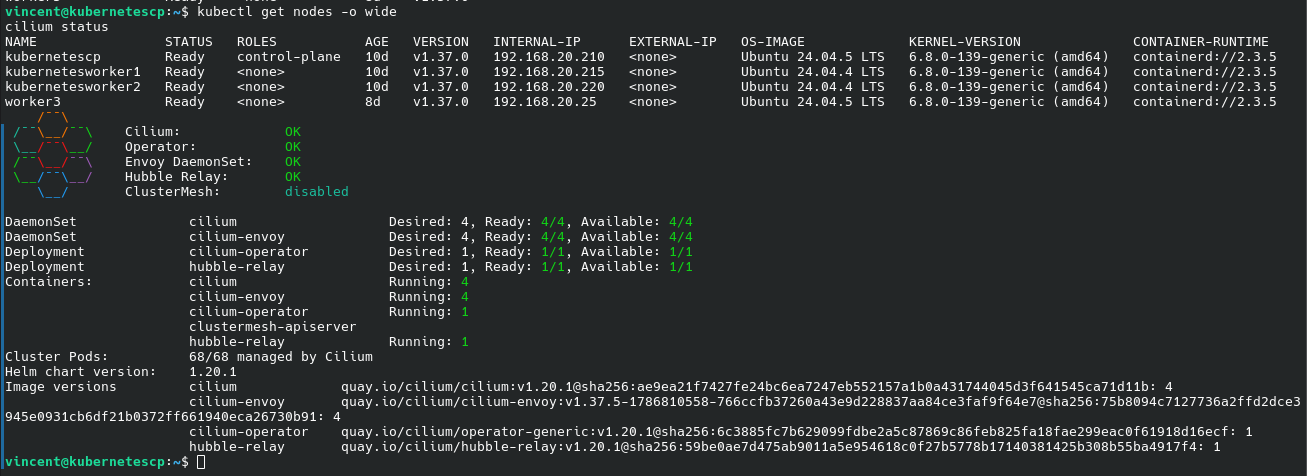
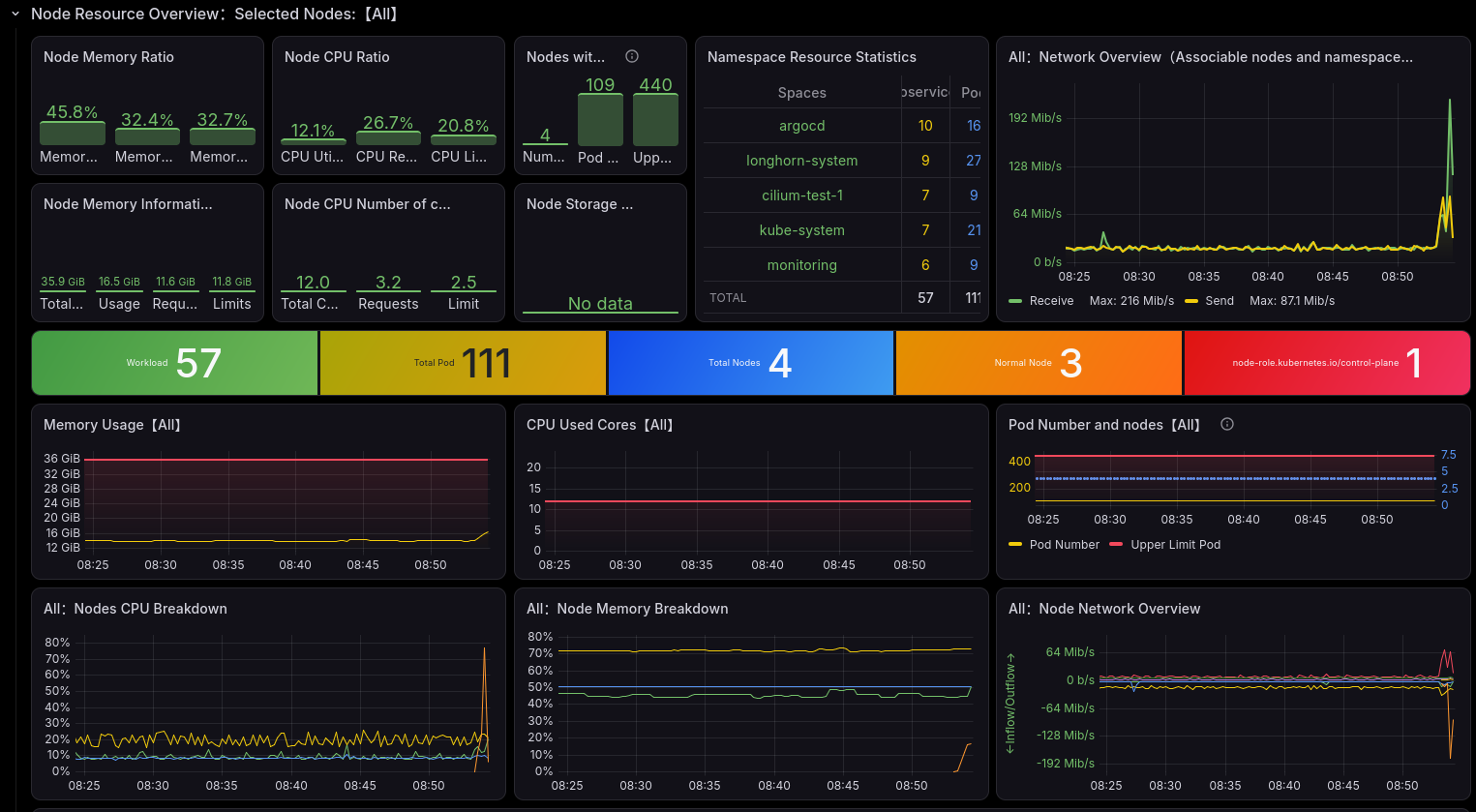
Grafana turns the same environment into an operational picture. Node pressure, workload count, CPU, memory and network activity can be compared before a small symptom becomes a blind troubleshooting session.
THE FIRST IMPLEMENTATION IS RARELY FINAL.
A RUST CONTROL PLANE FOR THE HOMELAB
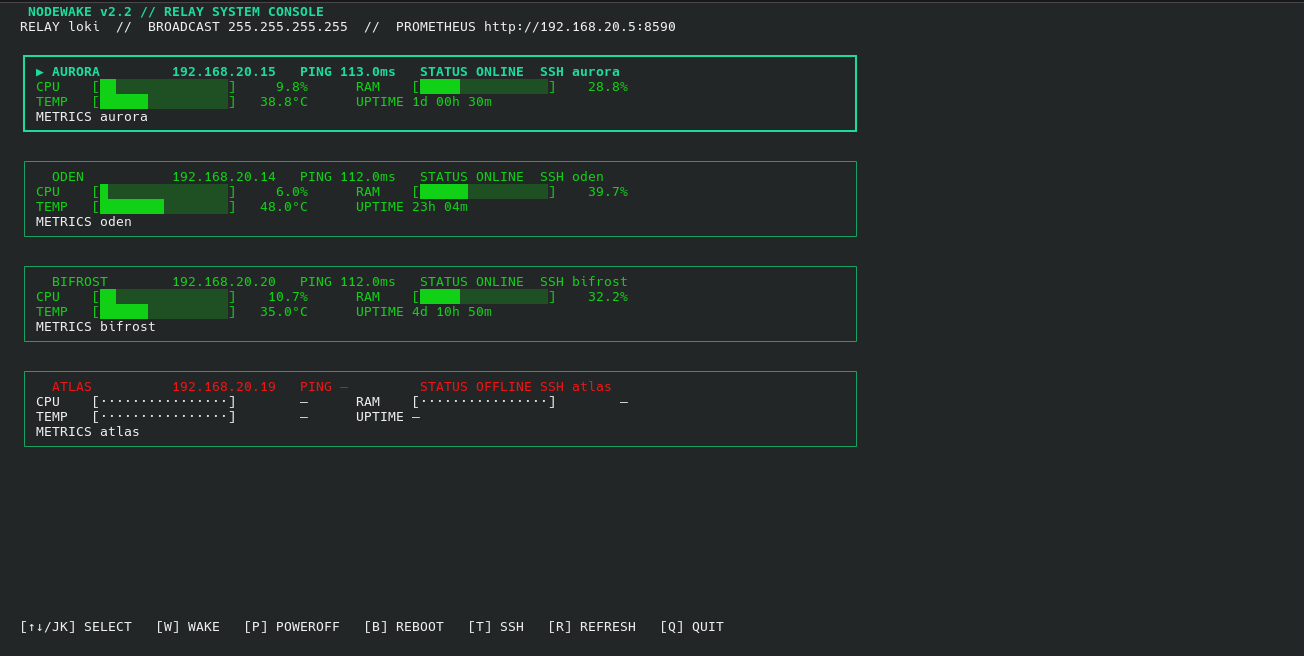
Nordfir began as a terminal view for seeing which machines were alive and acting on them without moving between separate tools.
A unified homelab dashboard for machine control, live metrics and power awareness — including watt usage, Wake-on-LAN, and policies that can start or stop nodes when capacity changes.
LINUX FROM SCRATCH / THE OPERATING SYSTEM BENEATH THE PLATFORM
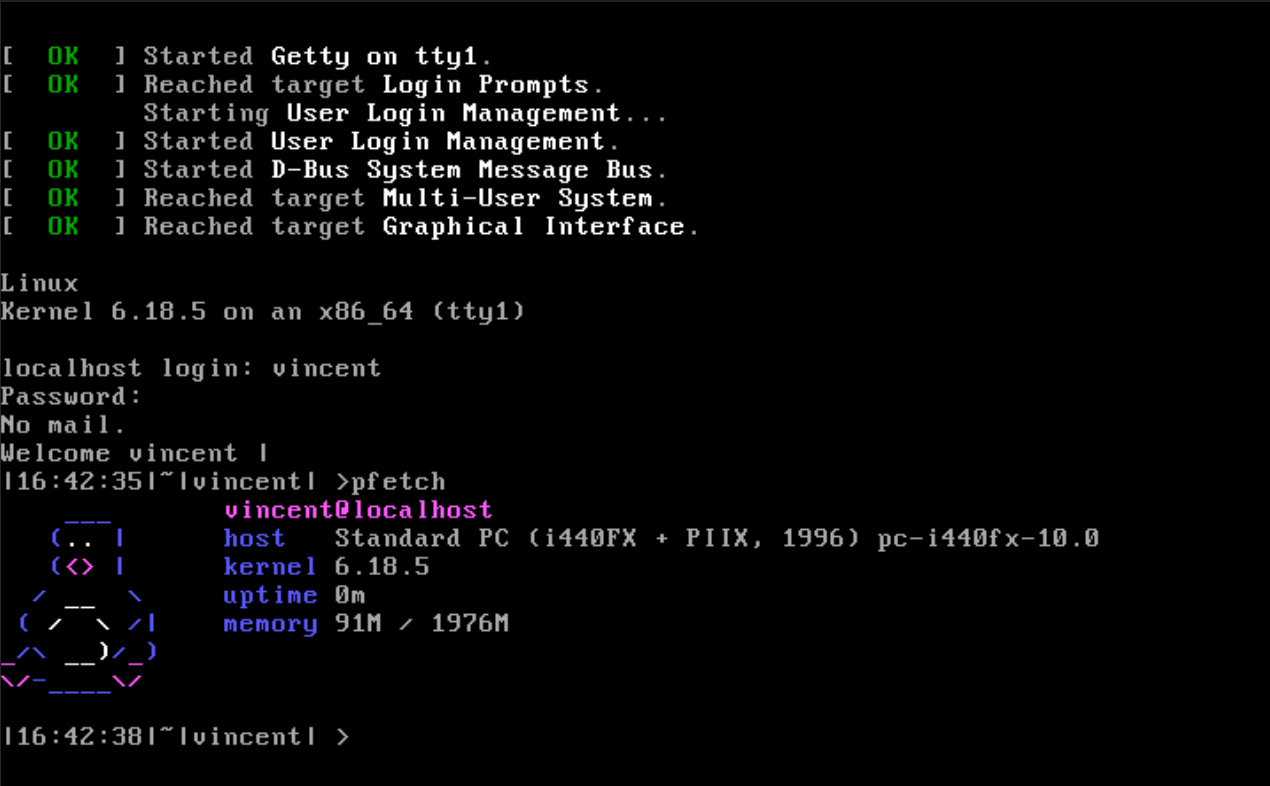
A custom Linux system built from source with Linux From Scratch and systemd. Tannhauser trades convenience for visibility: toolchain, libraries, boot process and kernel configuration all become parts of the system that must be understood.
Build the environment that will build the final system.
Compile and integrate the essential packages rather than inheriting a distribution.
Configure the kernel and reach a working login on real and virtual hardware.
A FAILED DEPLOYMENT IS STILL DATA.
I often rebuild infrastructure once I understand the weaknesses of the previous design.
When something fails, I prefer following the problem across application, container, network, operating system and hardware layers.
I prefer understanding a process manually before automating it.
AUTOMATION SHOULD REMOVE REPETITION,
NOT UNDERSTANDING.